
The DA's Push for 'Inclusion' Laws: A Step Back for B-BBEE Progress?
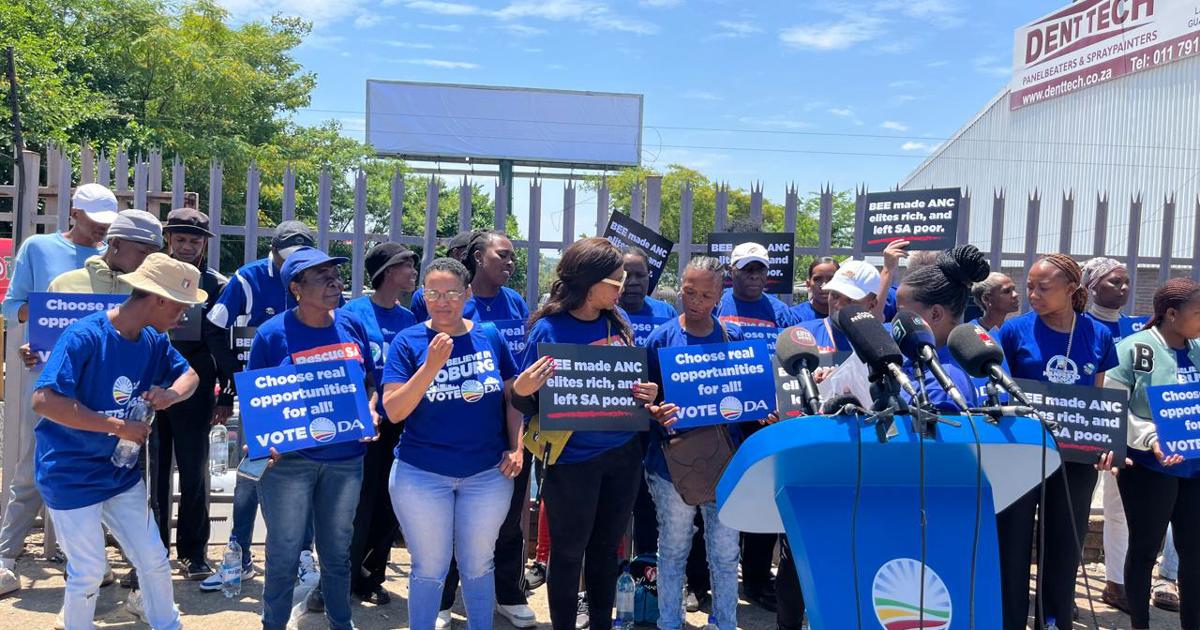
The DA's Push for 'Inclusion' Laws: A Step Back for B-BBEE Progress?
The Democratic Alliance (DA), South Africa's official opposition party, has recently reignited the debate on the controversial yet pivotal policy of Black Economic Empowerment (B-BBEE), a cornerstone of the country's socio-economic landscape. The party is campaigning for the replacement of the current B-BBEE legislation with what they term 'inclusion' laws. This proposed shift raises significant questions about the future of economic empowerment in South Africa, who truly stands to benefit, and whether such a move might undermine decades of progress toward redressing historical injustices.
Established in the post-apartheid era, B-BBEE was designed to redress the socioeconomic disparities created by decades of segregationist policies that systematically marginalized black South Africans. The policy aimed to pave the way for black individuals to participate meaningfully in the economy by encouraging companies to diversify ownership, management, skills development, and supply chains. It stands as a testament to South Africa’s commitment to rebuilding its economy on the pillars of equity and inclusivity.
However, the DA has been vocal in criticizing B-BBEE, asserting that it has, over time, morphed into a tool for a select few rather than broad-based empowerment. "The current B-BBEE framework has unfortunately become synonymous with cronyism and fronting," says John Steenhuisen, the DA leader. He argues that the policy, instead of uplifting the previously disadvantaged, has enriched a limited group of politically connected individuals. To illustrate, several high-profile instances of BEE fronting have surfaced, where white-owned companies created facade partnerships with black individuals to secure government contracts without real economic transfer.
It's vital to acknowledge these shortcomings, as critics pin a portion of the blame on the African National Congress (ANC), suggesting that B-BBEE, while well-intentioned, became a breeding ground for patronage networks and corruption. Over the years, countless ANC-linked business figures have risen to prominence, their success stories marred by allegations of impropriety, thus reinforcing the narrative that the party’s execution of B-BBEE has been less about empowerment and more about entrenching political power.
Despite these challenges, proponents of B-BBEE argue for its critical importance in the ongoing efforts to create a more equitable South African economy. "Without B-BBEE, we stand to lose the framework needed to ensure the economic participation of millions," notes Sipho Ntuli, an economist specializing in development. Ntuli highlights that while imperfect, the process of dismantling systemic inequities is long and fraught with complexity. "Improving B-BBEE is the way forward, not discarding it," he stresses.
The DA’s proposed 'inclusion' laws have been met with skepticism from many quarters. Detractors argue that such legislation might divert focus from ownership transfer and economic control, effectively consolidating economic power in the hands of white capitalists, thus perpetuating a status quo that excludes the majority. There is a palpable fear that removing B-BBEE could lead to a future where black South Africans are mainly employees while ownership and decision-making remain confined to a predominantly white minority.
The debate over B-BBEE and the DA's proposed alternatives continues to stir emotional and intellectual currents across the nation. It beckons us to reflect on the broader objectives of economic policies and their alignment with the pursuit of an equitable society. As South Africa grapples with these questions, it becomes increasingly clear that genuine empowerment involves more than legislative reform; it requires a collective moral and economic investment in the country’s future.
Ultimately, this crossroads represents a pivotal opportunity for introspection and action. It begs us to scrutinize not only the actors and their political agendas but also the underlying values we wish to uphold. South Africa's narrative of economic justice is still being written, and the choices made today will indelibly shape the legacy we leave behind. Whether through refining B-BBEE or crafting new pathways, the nation must remain steadfast in its commitment to a truly inclusive economy that serves everyone.