
Feroz Khan and Ebrahim Kadwa Released on Bail Amidst Intensifying Investigation
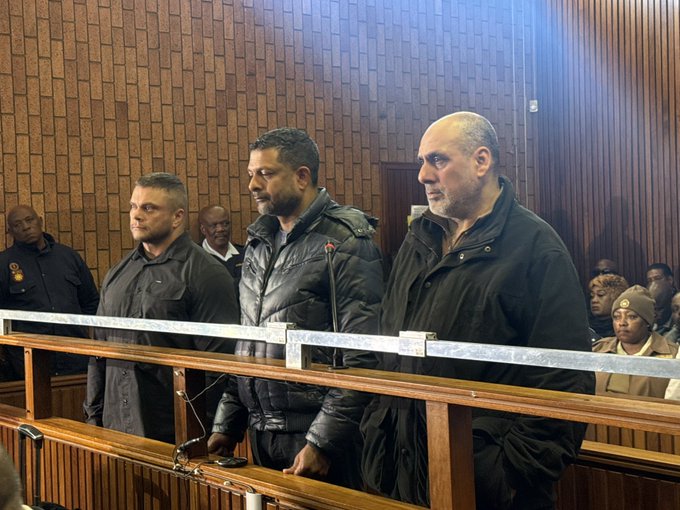
Feroz Khan and Ebrahim Kadwa Released on Bail Amidst Intensifying Investigation
In a case that has gripped the nation's attention, Feroz Khan and Ebrahim Kadwa, two high-profile businessmen, have been released on bail following their arrest on charges of financial misconduct. Their release comes amidst a backdrop of mounting pressure on law enforcement agencies to tackle corporate corruption in South Africa, a matter of urgent national discourse.
Both men, prominent figures in the financial sector, were taken into custody as part of an extensive probe into alleged embezzlement and fraud. The charges laid against them include siphoning off funds from investors and falsifying financial records, allegations they strongly deny. Their bail hearing, held at the Johannesburg Magistrates Court, was packed with media and spectators eager to catch a glimpse of the proceedings.
"We are confident that when all facts come to light, our clients will be exonerated," said Thapelo Mokoena, the defense attorney representing Khan. The court, acknowledging the defendants' ties to the community and their lack of previous criminal convictions, set bail conditions to ensure their availability for the ongoing investigation.
Prosecutors, however, view the release with skepticism. "It is vital that these charges are pursued with the full weight of the law," asserted Jacob Wolowitz, the lead prosecutor. "The scope of their alleged activities has potentially severe repercussions for economic stability and trust in corporate governance." Wolowitz’s office is seeking to expedite the trial process in light of the public's interest.
The case is emblematic of broader concerns over fraud and ethical lapses within South Africa’s business environment. Observers note that Khan and Kadwa's arrests mark an important chapter in the nation’s fight against white-collar crime, with numerous calls for stricter regulatory mechanisms. Professor Nandi Radebe of Wits University notes, "This isn’t just a legal battle. It’s a public reckoning with how business is conducted in our country."
With their release on bail, Khan and Kadwa are now expected to return to their business activities, albeit under stringent restrictions. Their companies, which are believed to have been directly involved in the fraud allegations, have pledged full cooperation with law enforcement agencies.
The public's response to this unfolding drama has been a mixture of anger and impatience. Community leader, Sarah Ntsimba, expressed local sentiments concisely: "People feel betrayed. They trusted these businessmen with their investments, and now there is a cloud of uncertainty hanging over their financial futures."
As the investigation continues, the spotlight remains on the judicial system's ability to handle such complex cases efficiently and justly. This unfolding case will likely set significant precedents on corporate accountability and governance in South Africa. The question remains: Can the legal system rise to the occasion?